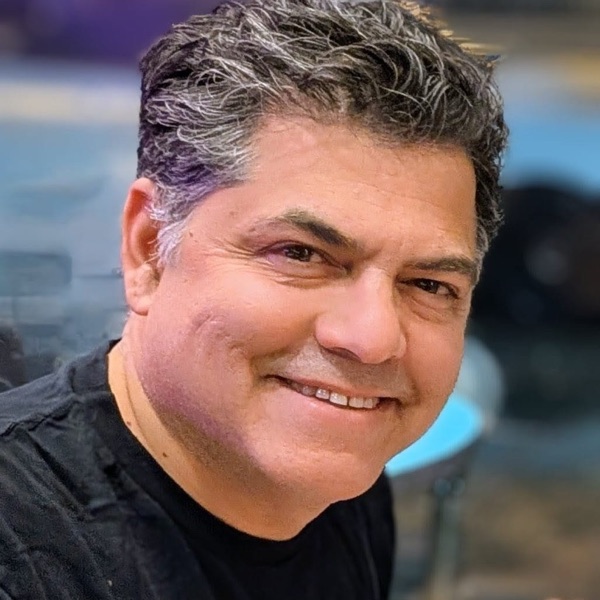
A specialist in complex obsessive-compulsive disorder
With deep training and experience across all three treatment modalities — medication, exposure-based cognitive behavioural therapy, and neuroscience-based treatments — and active research in each.
About
A career devoted to obsessive-compulsive and related disorders
Dr Himanshu Tyagi is a consultant neuropsychiatrist at the National Hospital for Neurology and Neurosurgery (NHNN), Queen Square, specialising in the treatment of complex obsessive-compulsive disorder (OCD) and related conditions, including Tourette syndrome, body dysmorphic disorder and neuropsychiatric comorbidities. He is trained and experienced in all three treatment modalities for OCD — medication, exposure-based cognitive behavioural therapy, and neuroscience-based treatments such as deep brain stimulation — and actively researches each. He holds a Certificate of Completion of Training in medical psychotherapy (CBT) and is on the GMC specialist register.
He runs the specialist stream of the national adult Tourette syndrome service for patients with a dual diagnosis of Tourette syndrome and OCD, with a weekly outpatient clinic at Queen Square accepting direct referrals from GPs and specialists anywhere in the country. He also provides expert neuropsychiatric input as an inpatient consultant within an NHS England-commissioned level 1 neurorehabilitation service. Until November 2025 he led the nationally commissioned inpatient specialist service for OCD at Priory Hospital North London.
Before joining UCLH at Queen Square in 2016, he coordinated the MRC-UCL randomised controlled trial of deep brain stimulation for severe, treatment-refractory OCD (2012–2016) at the UCL Institute of Neurology. He completed basic specialist training at St Mary's Hospital, London, and advanced training at the National Service for OCD & BDD at Springfield University Hospital, where his work was recognised with a national award from the Royal College of Psychiatrists in 2012.
He is a co-founder and current vice-chair of the Royal College of Psychiatrists' faculty network for Obsessive-Compulsive and Related Disorders (OCARD), and runs a special interest group for psychiatry registrars in neuropsychiatry. A prominent voice in public understanding of OCD — noting that two out of three people with the condition remain undiagnosed — he led the inaugural OCD Neuroscience Awareness Week at the UCL Queen Square Institute of Neurology in October 2025. An early advocate of technology and AI in healthcare, he has published several books for medical students and co-founded RxPG, an international educational network for medical students. He consults in English, Hindi and Punjabi.
Conditions Treated
Specialist assessment and treatment, ages thirteen and over
- Obsessive-compulsive disorder (OCD)
- Tourette syndrome & tic disorders
- Body dysmorphic disorder (BDD)
- Health anxiety
- Generalised anxiety disorder (GAD)
- Complex phobias
- Emetophobia (fear of vomiting)
- Trichotillomania (hair pulling)
- Depression with comorbid OCD
- ADHD with neuropsychiatric comorbidity
- Complex neuropsychiatric presentations
- Neurorehabilitation psychiatry
Treatments
Three modalities, one specialist — chosen and combined to suit each patient
- I. Medication
- Specialist pharmacological management of OCD, tics and complex comorbidities, including augmentation strategies for treatment-resistant illness, informed by more than twenty-five years of clinical practice in tertiary settings.
- II. Exposure-based cognitive behavioural therapy
- Specialist CBT delivered by a medical psychotherapist with a CCT in the modality — exposure and response prevention (ERP) for OCD and related disorders, and habit reversal training for tics, Tourette syndrome and body-focused repetitive behaviours.
- III. Neuroscience-based treatments
- Assessment and guidance on neuromodulation for severe, treatment-refractory OCD — including deep brain stimulation — drawing on his leadership of the UK's first DBS-for-OCD trial and ongoing research into the brain circuits of OCD.
Private Appointments
Consultations at Queen Square, in person or online
Fees are for consultation only and are confirmed in writing before your appointment. Any additional charges — for example for reports, prescriptions or extended correspondence — will be explained in advance. Patients using insurance should check their policy terms, including any excess or shortfall, with their insurer.
To arrange a consultation
Private Secretary — Claire Young
020 8123 0234 ·
secretary@drhimanshutyagi.com
Queen Square Private Consulting Rooms · 23 Queen Square, London WC1N 3BG
NHS & Academic Roles
National specialist services at Queen Square and beyond
UCLH · NHNN Queen Square
National Tourette Syndrome & OCD Clinic
Leads the specialist stream for dual-diagnosis Tourette syndrome and OCD within the national adult Tourette service, with a weekly outpatient clinic at the Basil Samuel outpatient department accepting referrals from across the UK.
UCLH · NHNN Queen Square
Neurorehabilitation Unit
Inpatient consultant providing specialist neuropsychiatric input within an NHS England-commissioned level 1 tertiary neurorehabilitation service.
UCL Queen Square Institute of Neurology
Research & Teaching
Honorary Clinical Research Fellow, Department of Clinical and Movement Neurosciences; co-investigator on the Op-TICS trial of DBS in severe Tourette syndrome; supervises MSc placements and a neuropsychiatry special interest group for registrars.
Royal College of Psychiatrists
OCARD Network
Co-founder and current vice-chair of the RCPsych faculty network for Obsessive-Compulsive and Related Disorders (OCARD).
Public Engagement
OCD Neuroscience Awareness Week
Founded and led the inaugural OCD Neuroscience Awareness Week at the UCL Queen Square Institute of Neurology (October 2025), and hosted the national OCD clinicians' summit during OCD Awareness Week 2024.
Selected Publications
Over ninety research outputs and 870+ citations on the neuroscience of OCD
A Randomized Trial Directly Comparing Ventral Capsule and Anteromedial Subthalamic Nucleus Stimulation in Obsessive-Compulsive Disorder
Tyagi H, Apergis-Schoute AM, Akram H, Foltynie T, Limousin P, Drummond LM, Fineberg NA, et al.
Mapping Dysfunctional Circuits in the Frontal Cortex Using Deep Brain Stimulation
Hollunder B, Ostrem JL, Sahin IA, Rajamani N, Oxenford S, Butenko K, et al. (incl. Tyagi H).
Deep Brain Stimulation for Obsessive-Compulsive Disorder: Optimal Stimulation Sites
Meyer GM, Hollunder B, Li N, Butenko K, Dembek TA, Hart L, et al. (incl. Tyagi H).
Deep Brain Stimulation for Obsessive-Compulsive Disorder: A Crisis of Access
Visser-Vandewalle V, Andrade P, Mosley PE, Greenberg BD, Schuurman R, et al. (incl. Tyagi H).
Cutting Through Stigma: Psychiatry and Neurosurgery Working Together
Zrinzo L, Huys Q, Howard R, et al. (incl. Tyagi H).
The Occipital-Fronto-Limbic Circuit of Body Dysmorphic Disorder: A Systematic Review and Meta-Analysis
Cheng Y, Burrows E, Zrinzo L, et al. (incl. Tyagi H).
Contact
Referrals, appointments and correspondence
Private Practice
Queen Square Private Consulting Rooms
23 Queen Square, London WC1N 3BG
Private Secretary: Claire Young
Tel: 020 8123 0234
secretary@drhimanshutyagi.com
Book online
NHS · Tourette/OCD Clinic
National Hospital for Neurology & Neurosurgery
Box 19, Queen Square, London WC1N 3BG
GP & specialist referrals accepted from anywhere in the UK
h.tyagi@nhs.net
NHS · Neurorehabilitation Unit
National Hospital for Neurology & Neurosurgery
Box 113, Queen Square, London WC1N 3BG
Patient enquiries: 020 3448 3094 / 020 3448 3486
Academic
UCL Institute of Neurology
Department of Clinical and Movement Neurosciences
Box 146, Queen Square, London WC1N 3BG
h.tyagi@ucl.ac.uk
Royal College of Psychiatrists
OCARD Network — Vice-Chair
Network for Obsessive-Compulsive and Related Disorders
21 Prescot Street, London E1 8BB
Professional Standards
Registration, fees, confidentiality and how to raise a concern
- Registration and regulation
- Dr Tyagi is registered with the General Medical Council with a licence to practise (GMC no. 6046794) and is on the specialist register. He practises in accordance with the GMC's Good Medical Practice and holds professional indemnity cover for his private work. Private consultations take place at Queen Square Private Consulting Rooms, operated by UCLH Private Healthcare, part of University College London Hospitals NHS Foundation Trust.
- Fees and financial interests
- Consultation fees are published on this page and confirmed in writing before any appointment, in line with the Competition and Markets Authority's requirements for private healthcare. Dr Tyagi has no financial interest in any pharmaceutical company, and no pharmaceutical industry payments to declare — this can be verified at Disclosure UK. He does not receive payment for referrals to, or from, any other clinician or service.
- Confidentiality and your information
- Clinical information is held in confidence and handled in line with the GMC's confidentiality guidance and UK data protection law. With your consent, correspondence is normally shared with your GP so that your care is coordinated. This website itself collects no personal data, sets no cookies and uses no third-party tracking or analytics; online booking is handled separately by Semble, whose own privacy notice applies.
- Scope of this website
- The information here describes Dr Tyagi's practice and is not a substitute for individual medical advice. A consultation involves a full assessment, and any treatment recommended will be discussed with you — including its benefits, risks and alternatives — so that you can make an informed decision. Reports of research are provided for information; they do not imply that any particular treatment is suitable for you.
- Raising a concern
- If you are unhappy with any aspect of your care, please raise it with Dr Tyagi or his private secretary in the first instance so that it can be put right. Concerns about care received at Queen Square can also be raised with UCLH Private Healthcare, and any patient may contact the General Medical Council.
- In an emergency
- This practice does not provide emergency or crisis care. If you or someone else is in immediate danger, call 999 or go to your nearest emergency department. For urgent mental health support call NHS 111 (option 2), or the Samaritans free on 116 123 at any time.